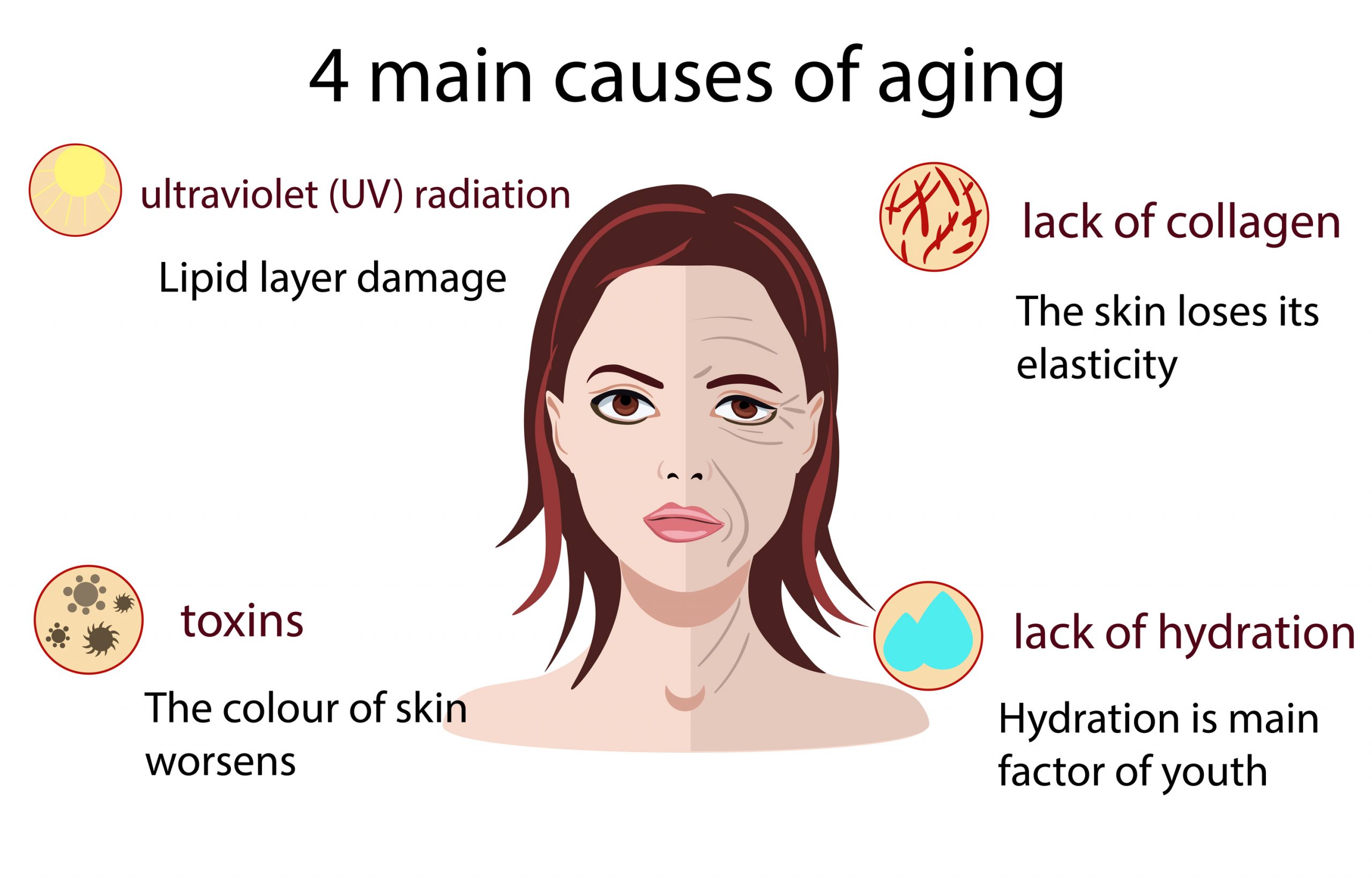
What You Can Expect With Aging Skin In your 20s, your skin remains in its golden years, however early practices established the tone for your future skin. Collagen manufacturing begins to slow down simply a little, and way of living stressors can activate dehydration or blemishes. Skin aging occurs via a mix of innate (all-natural, hereditary) and external (environmental) variables. Talk with your doctor if indicators of early aging show up instantly, hurt or troublesome, or worsen promptly.
What Is Organic Aging Of The Skin?
Much of the currently readily available study has been moneyed by the industries that may acquire an economic gain from producing positive results, so there are issues about potential problems of interest and predisposition in this field. Menopause happens for a lot of females around the age of 51 in the USA. At this age, the results of a life time of sun exposure combined with hormonal adjustments, add to the loss of collagen and also Muscle toning and enhancement skin discoloration. Whatever's your skin kind, great skin care behaviors go a lengthy method to smooth skin structure. Keep pores tiny-looking with a double-cleanse regimen at the end of the day to eliminate make-up and sunscreen, and include a clearing up significance for smooth skin. Finally, control oil manufacturing with a moisturiser fit to your skin type-- go for light-weight lotions or emulsions that will moisturize without blocking pores. Regular sun defense should start the other day, no matter your age. Sun direct exposure is the main source of visibly maturing skin in all skin types, so it's necessary to apply a broad-spectrum sunscreen daily with at least an SPF 30. Reapplication of sun block relying on your degree of sunlight exposure while driving or hanging out outside throughout the day is a must. Checking https://files.fm/u/5kncebe8ra826mmn out the tag to determine for how long the sunscreen lasts is of utmost value.
This process is aggravated by oxidative stress and chronic swelling, further speeding up skin aging [16]With age, a decline in lipid content causes enhanced transepidermal water loss and lessened moisture retention.It recognizes and talks about innate variables affecting skin aging, including hormonal modifications, metabolic processes, body immune system decrease, and genetic predisposition.Stay out of the sunlight-- or do all you can to safeguard on your own from it.This can shield against aging from the sunlight and reduced your threat of skin cancer.
Just How To Build Healthy And Balanced Skin Treatment Behaviors
It controls your temperature level and maintains the equilibrium of water and electrolytes. It can offer us pleasure when touched and alert us to agonizing stimuli. "Excess weight triggers skin to stretch and lowers the toughness and luster of the hair and nails," states Dr. Vij. It also triggers skin problem including dark spots on the skin (acanthosis nigricans), developments that protrude from the skin (skin tags), stretch marks, and varicose capillaries.
It Starts To Produce Great Lines
These are locations of hyperpigmentation that commonly appear on components of the body regularly revealed to the sun, such as the face, hands, and arms. While these places are safe, they can make the skin show up older and uneven. With age, the skin's capacity to produce all-natural oils reduces, often resulting in dry skin. This dry skin is compounded by the lowered performance of the skin's lipid obstacle, which is necessary for preserving dampness.
What to scrub on face to look more youthful?
Furthermore, the epidermis, or outer layer, ends up being less efficient at preserving dampness and shielding the skin from ecological stress factors. PRP may instigate the union of collagen and various other network components by animating the actuation of fibroblasts, subsequently, recovering the skin [39] " Below emerging" refers to a particular, warmth prompted denaturalization of dermal collagen that creates a responsive combination [34] In the Free Radical Concept of Ageing (FRTA), the involvement of complimentary radicals in endogenous metabolic responses, was proposed in 1954 [22] The FRTA recommends that the typical ageing process is the initiation of cost-free Radical Reactions (RRs). Last but not least, tissue design and regenerative medicine existing interesting chances. Techniques like 3D bioprinting and stem cell-- based therapies might regrow aged or damaged skin, bring back vibrant homes. Pigmentation adjustments are common indicators of aging skin, showing up in different forms. Age places, or solar lentigines, are level, brown spots that usually establish on sun‐exposed locations like the face, hands, and arms. These spots develop because of the local accumulation of melanin triggered by long‐term UV direct exposure. Creases are lines and creases that develop in the skin, typically around the eyes, mouth, and temple. They develop as the skin loses flexibility, and can deepen with duplicated faces, sun exposure, and gravity. Impacts old include things that you see (like creases, dark places or grey hair) and things you experience (like vision or hearing changes). The starting points you notice saggy skin are commonly your jawline and neck. And exercises for your neck, jaw, and throat muscular tissues may additionally help. When small capillary near the surface of your skin break, you get a swelling. As you grow older, your skin gets thinner and loses fat, which can make you bruise much more conveniently. It's typically nothing to stress over, however it could be an indicator of something extra major. Some blood-thinning medications can also cause even more or bigger contusions, so tell your medical professional regarding any medications you take. Several theories of aging have been suggested including DNA or hereditary theory, free radical concept, neuroendocrine concept, membrane layer concept, Hayflick restriction concept, telomerase theory and mitochondrial decline theory. If the lysine obtained cross-linked compound rises, then the photoaged skin is confirmed [7] Company skin is chock-full of two architectural proteins, collagen and elastin, which maintain your skin strong and resilient. But manufacturing slows down as you age-- from your 20s onwards, your skin has less collagen.